

Blogs
Polycystic Kidney Disease: Symptoms, Causes & Treatment

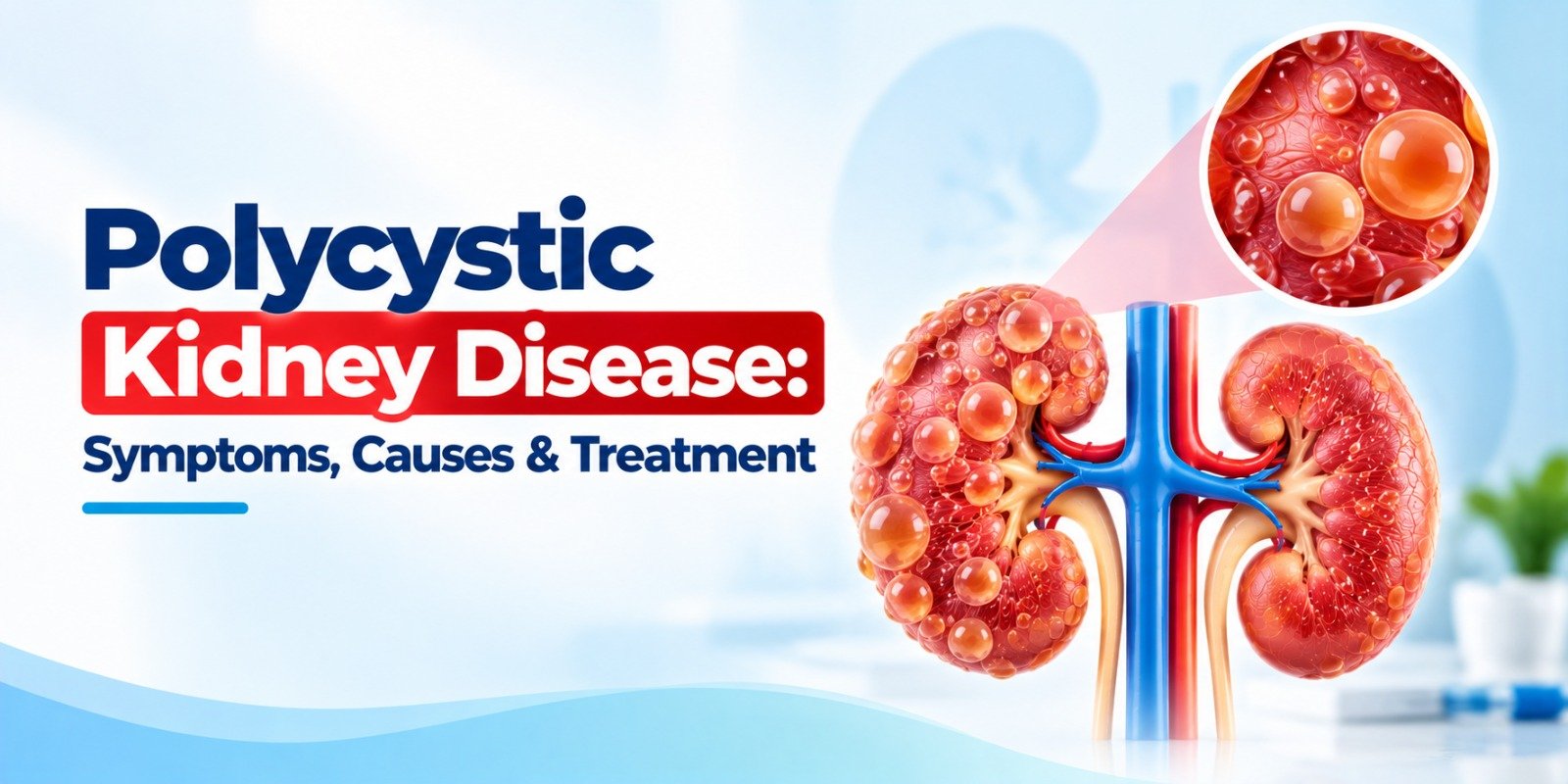
Polycystic Kidney Disease (PKD) is a genetic condition in which many fluid-filled cysts develop inside the kidneys. These cysts can grow over time and may make the kidneys larger and reduce their ability to work properly.
PKD is different from simple kidney cysts, which are common and usually harmless. In PKD, many cysts can develop and may affect kidney function.
What Is Polycystic Kidney Disease?
PKD is usually passed from parents to children through genes. The cysts grow inside the kidneys and can increase in size and number over time.
There are two main types:
1. Autosomal Dominant Polycystic Kidney Disease (ADPKD)
ADPKD is the most common type. It can affect both men and women and usually becomes noticeable during adulthood.
A person with ADPKD has a 50% chance of passing the condition to each child if they carry the disease-causing gene.
2. Autosomal Recessive Polycystic Kidney Disease (ARPKD)
ARPKD is much less common. It usually appears during infancy or childhood and can cause serious kidney and liver problems.
What Causes Polycystic Kidney Disease?
PKD is caused by changes, or mutations, in certain genes.
In ADPKD, changes commonly involve the PKD1 or PKD2 genes.
Because PKD is genetic, having a close family member with the condition can increase a person’s risk.
Symptoms of Polycystic Kidney Disease
Some people may have PKD for years without obvious symptoms.
As the cysts grow, possible symptoms may include:
- High blood pressure
- Pain in the back or side
- Headaches
- Blood in the urine
- Frequent urinary tract infections
- Kidney stones
- Feeling tired
- Increased abdominal size or fullness
- Changes in kidney function
Symptoms can vary from person to person.
How Does PKD Affect the Kidneys?
As cysts grow, they can put pressure on normal kidney tissue. Over time, this may reduce the kidneys’ ability to filter waste and extra fluid from the blood.
Some people with PKD eventually develop chronic kidney disease (CKD) and may progress to kidney failure.
However, the rate of progression can be very different between individuals.
Can PKD Cause High Blood Pressure?
Yes. High blood pressure is common in people with PKD.
The growing cysts can affect the kidney’s normal structure and blood flow, which can contribute to high blood pressure.
Controlling blood pressure is important because uncontrolled high blood pressure can further damage kidney function.
Other Problems Linked With PKD
PKD does not only affect the kidneys. Some people may also develop cysts in other organs, particularly the liver.
Other possible complications include:
- Kidney stones
- Urinary tract infections
- Liver cysts
- Heart valve problems
- Blood vessel problems, including certain brain aneurysms
Not everyone with PKD develops these complications.
How Is Polycystic Kidney Disease Diagnosed?
Doctors may use several tests to diagnose PKD.
Ultrasound
An ultrasound can show cysts in the kidneys and is often used as an initial imaging test.
CT Scan or MRI
These scans can provide more detailed images of the kidneys and help doctors assess the size and number of cysts.
Blood Tests
Blood tests can measure kidney function, including creatinine and estimated glomerular filtration rate (eGFR).
Genetic Testing
Genetic testing may be recommended in certain situations, particularly when the diagnosis is unclear or when information about the genetic condition is important for family planning.
How Is PKD Treated?
There is currently no simple treatment that removes all kidney cysts. Treatment focuses on slowing kidney damage, managing symptoms, and treating complications.
1. Control Blood Pressure
Keeping blood pressure under control is an important part of protecting kidney function.
Doctors may prescribe medicines such as ACE inhibitors or ARBs depending on the patient’s condition.
2. Manage Pain
Kidney or back pain may occur because of cysts, kidney stones, or infections.
The safest pain treatment depends on kidney function and other health conditions. People with kidney disease should speak with a healthcare professional before using painkillers regularly.
3. Treat Infections
Urinary tract and kidney infections may require appropriate medical treatment, including antibiotics when a bacterial infection is present.
4. Treat Kidney Stones
If kidney stones develop, treatment depends on their size, location, and whether they are blocking urine flow.
5. Medicines to Slow Disease Progression
For some adults with rapidly progressing ADPKD, doctors may consider medicines such as tolvaptan. Whether it is appropriate depends on factors such as kidney function, disease progression, age, and other health considerations.
What Happens if PKD Causes Kidney Failure?
If kidney function becomes severely reduced, treatment options may include:
- Hemodialysis
- Peritoneal dialysis
- Kidney transplantation
A kidney transplant may be considered for suitable patients with kidney failure.
Can People With PKD Live a Normal Life?
Many people with PKD continue to work, study, travel, and enjoy their daily activities.
The condition affects people differently. Regular medical care can help monitor kidney function, blood pressure, cyst growth, and possible complications.
Following the treatment plan and attending regular check-ups are important.
Lifestyle Tips for People With PKD
A healthy lifestyle can support overall kidney health.
Some useful habits include:
- Monitor your blood pressure regularly
- Follow your doctor’s advice about salt intake
- Stay physically active
- Maintain a healthy weight
- Avoid smoking
- Limit alcohol according to medical advice
- Take prescribed medicines regularly
- Stay adequately hydrated unless your doctor has advised fluid restriction
- Attend regular kidney check-ups
Do not make major changes to your fluid or diet intake without discussing them with your healthcare professional.
When Should You See a Doctor?
Speak with a healthcare professional if you have:
- A family history of PKD
- Persistent high blood pressure
- Blood in your urine
- Repeated urinary tract infections
- Persistent pain in your back or side
- Kidney stones
- Unexplained changes in kidney function
If you already have PKD, regular monitoring can help detect changes early.
Final Thoughts
Polycystic Kidney Disease is a genetic condition that causes multiple cysts to develop in the kidneys. These cysts can grow over time and may eventually affect kidney function.
Early diagnosis, regular monitoring, blood pressure control, a healthy lifestyle, and appropriate treatment can help manage the condition and protect kidney health.