
Blogs
High Creatinine: Causes, Symptoms and Treatment

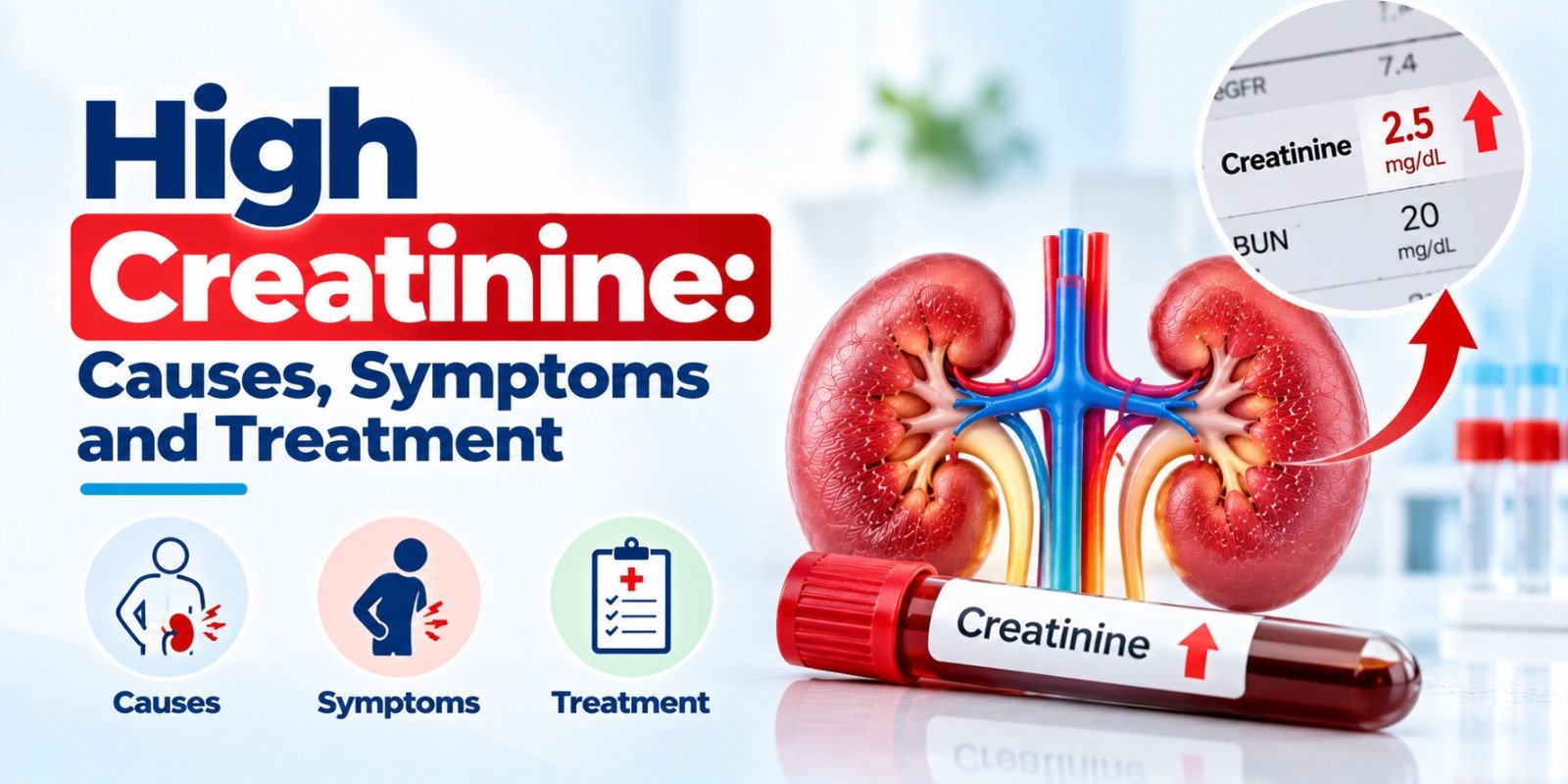
Creatinine is a waste product produced naturally by the muscles. Healthy kidneys filter creatinine from the blood and remove it through urine.
When a blood test shows high creatinine, it can sometimes mean that the kidneys are not filtering the blood properly. However, high creatinine does not always mean kidney disease. Other factors, such as dehydration, certain medicines, intense exercise, or high muscle mass, can also affect the result.
What Is Creatinine?
Creatinine is produced when muscles use energy. It normally enters the bloodstream and is removed by the kidneys.
A blood test can measure the amount of creatinine in your blood. Doctors often look at creatinine along with eGFR (estimated glomerular filtration rate) to understand how well the kidneys are working.
One high creatinine result does not always give the complete picture. Doctors may repeat the test and look at other blood and urine results.
What Causes High Creatinine?
There are several possible causes of high creatinine.
1. Kidney Disease
Kidney disease can reduce the kidneys’ ability to remove creatinine from the blood.
Chronic kidney disease may develop slowly, while an acute kidney injury can cause kidney function to decrease suddenly.
2. Dehydration
Not drinking enough fluids or losing a lot of fluid through vomiting, diarrhea, fever, or heavy sweating can affect kidney function and may temporarily increase creatinine.
3. Certain Medicines
Some medicines can affect kidney function or change creatinine levels.
If you take regular medicines or supplements, tell your doctor about everything you are taking.
4. Intense Exercise
Heavy exercise can temporarily increase creatinine because muscle activity produces creatinine.
5. High Muscle Mass
People with greater muscle mass may naturally have higher creatinine levels than people with less muscle mass.
6. A High-Meat Meal
Eating a large amount of cooked meat shortly before a blood test can temporarily affect creatinine levels in some people.
7. Urinary Tract Blockage
Problems such as kidney stones, an enlarged prostate, or other conditions that block urine flow can sometimes affect kidney function and increase creatinine.
What Symptoms Can High Creatinine Cause?
High creatinine itself usually does not cause specific symptoms. Symptoms, when present, are more often related to the underlying condition affecting kidney function.
Possible symptoms of reduced kidney function include:
- Tiredness or weakness
- Swelling in the feet, ankles, or face
- Changes in urination
- Foamy urine
- Nausea or vomiting
- Poor appetite
- Itchy skin
- Muscle cramps
- Shortness of breath
Some people with early kidney disease may have no symptoms at all.
How Is High Creatinine Diagnosed?
If your creatinine is higher than expected, your doctor may recommend additional tests.
Blood Tests
Creatinine is commonly used to calculate eGFR, which estimates how well the kidneys filter blood.
Doctors may also check other blood measurements depending on the situation.
Urine Tests
A urine test can look for:
- Protein or albumin
- Blood
- Signs of infection
- Other abnormalities
The urine albumin-to-creatinine ratio (UACR) may be used to look for kidney damage.
Imaging Tests
If a blockage or another kidney problem is suspected, an ultrasound or other imaging test may be recommended.
What Is the Treatment for High Creatinine?
There is no single treatment for high creatinine because treatment depends on why the creatinine is high.
If Dehydration Is the Cause
Your healthcare professional may recommend appropriate fluid replacement, depending on your health condition.
If a Medicine Is Affecting Kidney Function
Your doctor may change the medicine or dose if appropriate.
Do not stop prescribed medicines on your own.
If There Is Kidney Disease
Treatment may focus on protecting remaining kidney function. This can include:
- Controlling blood pressure
- Managing diabetes
- Following an appropriate diet
- Treating underlying kidney problems
- Taking prescribed medicines
- Regular blood and urine tests
If There Is a Urinary Blockage
The doctor will identify and treat the cause of the blockage, which may involve medicines or a procedure depending on the problem.
If There Is an Acute Kidney Injury
Acute kidney injury requires finding and treating the underlying cause as soon as possible.
In severe cases, temporary dialysis may sometimes be needed.
Can High Creatinine Come Down?
Yes, creatinine can decrease when the underlying cause is temporary and is successfully treated.
For example, if dehydration is responsible, creatinine may improve after appropriate treatment.
However, if high creatinine is caused by chronic kidney disease, the goal is usually to manage the underlying condition and protect kidney function rather than simply trying to lower the creatinine number.
How Can You Protect Your Kidney Health?
Some healthy habits can help protect kidney function:
- Keep blood pressure under control
- Manage blood sugar if you have diabetes
- Stay adequately hydrated unless your doctor has advised fluid restriction
- Reduce excess salt
- Maintain a healthy weight
- Stay physically active
- Avoid smoking
- Take medicines as prescribed
- Avoid unnecessary use of painkillers
- Get regular kidney tests if you are at increased risk
When Should You See a Doctor?
If a blood test shows high creatinine, speak with your healthcare professional to understand the possible cause.
Seek prompt medical attention if you have high creatinine along with:
- Very little or no urine
- Severe swelling
- Shortness of breath
- Persistent vomiting
- Confusion
- Severe weakness
- Severe pain in the side or back
- Signs of dehydration
These symptoms may indicate a more serious problem that needs urgent assessment.
Final Thoughts
High creatinine is a laboratory finding, not a diagnosis by itself. It can be related to reduced kidney function, but dehydration, exercise, diet, medicines, muscle mass, and other factors can also affect creatinine levels.
If your creatinine is high, your doctor will usually consider your eGFR, urine tests, previous results, symptoms, medicines, and overall health to understand what is happening.