

Blogs
Kidney Transplant Process: Evaluation to Recovery

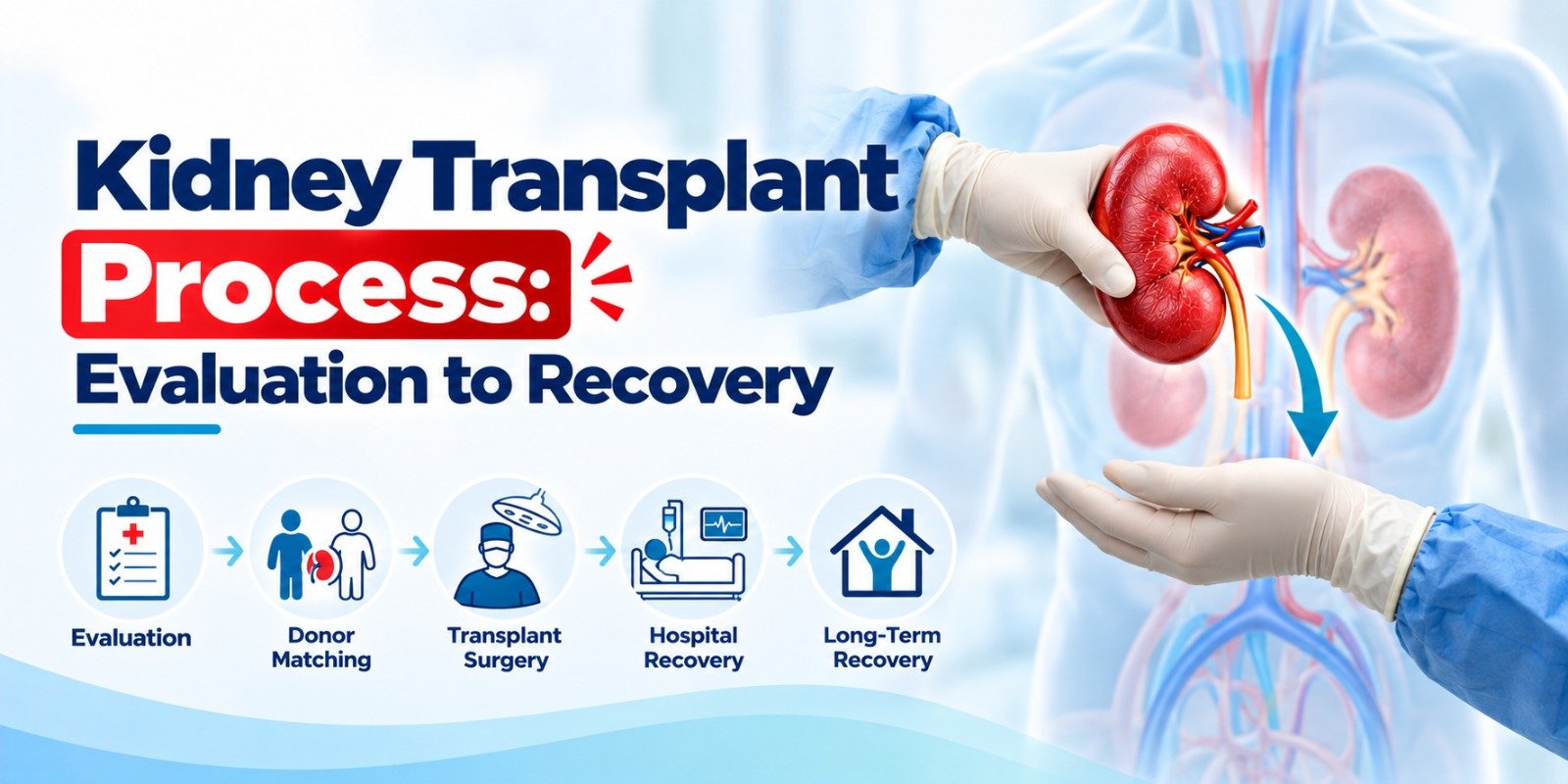
A kidney transplant is a major treatment option for people with advanced kidney disease or kidney failure. It involves placing a healthy kidney from a suitable donor into the body of a person whose kidneys are no longer working well enough.
The transplant process does not begin with surgery. There are several important steps, including medical evaluation, finding a suitable donor, preparation for surgery, the transplant procedure, and recovery.
What Is a Kidney Transplant?
A kidney transplant is a surgery in which a healthy kidney from a donor is placed inside the body of a person with kidney failure.
The donor may be:
- A living donor
- A deceased donor
The transplanted kidney can take over much of the work of the patient’s damaged kidneys.
Not every person with kidney disease needs or can receive a transplant. Doctors carefully evaluate each patient before recommending this treatment.
Step 1: Kidney Transplant Evaluation
The first step is a detailed medical evaluation.
Doctors check whether the patient is healthy enough to undergo surgery and manage the medicines needed after transplantation.
The evaluation may include:
- Blood tests
- Urine tests
- Blood pressure checks
- Heart tests
- Lung tests
- Imaging tests
- Infection screening
- Cancer screening when appropriate
- Review of medical history
- Assessment of other health conditions
The transplant team may also assess whether the patient can safely take anti-rejection medicines and attend regular follow-up appointments.
Step 2: Finding a Suitable Donor
A kidney can come from a living or deceased donor.
Living Donor
A living donor may be a family member, friend, or another suitable person who is medically able and willing to donate a kidney.
Deceased Donor
A kidney may also come from a person who has donated organs after death. Patients are matched through the appropriate transplant system according to medical and allocation factors.
Step 3: Matching the Donor and Recipient
Before transplantation, doctors perform tests to determine whether the donor kidney is suitable for the recipient.
These tests may include:
- Blood group testing
- Tissue typing
- Antibody testing
- Crossmatching
- Other medical compatibility tests
A suitable match can help reduce the risk of certain transplant complications.
Step 4: Preparing for the Transplant
Once a patient is approved and a suitable kidney becomes available, the transplant team provides instructions for preparing for surgery.
The patient may need to:
- Follow specific eating or drinking instructions
- Adjust certain medicines
- Complete additional medical tests
- Discuss the surgery and possible risks
- Arrange support for recovery after leaving the hospital
The medical team explains what the patient should do before surgery.
Step 5: Kidney Transplant Surgery
During the surgery, the donor kidney is placed inside the lower part of the patient’s abdomen.
The surgeon connects the transplanted kidney to:
- Blood vessels
- The bladder through the ureter
The patient’s own damaged kidneys are usually left in place unless there is a medical reason to remove them.
The transplanted kidney may start producing urine soon after surgery, although this can vary between patients.
Step 6: Recovery in the Hospital
After surgery, the patient stays in the hospital for monitoring.
Doctors and nurses regularly check:
- Kidney function
- Urine production
- Blood pressure
- Blood tests
- Signs of infection
- Signs of rejection
- Fluid balance
The patient may also receive medicines to prevent rejection and other complications.
The length of the hospital stay varies depending on the patient’s recovery and overall health.
Step 7: Anti-Rejection Medicines
After a transplant, the immune system may recognize the new kidney as foreign and try to attack it. This is called rejection.
To reduce this risk, transplant patients usually need anti-rejection or immunosuppressive medicines.
These medicines must be taken exactly as prescribed.
Regular blood tests help doctors monitor kidney function and medicine levels and adjust treatment when needed.
Step 8: Recovery at Home
Recovery continues after the patient leaves the hospital.
During this period, patients may need to:
- Take medicines on schedule
- Attend regular follow-up appointments
- Have blood tests as recommended
- Keep the surgical area clean
- Follow dietary and activity advice
- Avoid infections when possible
- Watch for unusual symptoms
The transplant team provides specific instructions for each patient.
What Are the Signs of Possible Rejection?
Kidney rejection does not always cause obvious symptoms, which is why regular blood tests are important.
Possible warning signs can include:
- Reduced urine output
- Swelling
- Weight gain from fluid
- Fever
- Pain around the transplant area
- Increased blood pressure
- Changes in kidney function
These symptoms can have other causes as well. If you have a kidney transplant and notice unusual symptoms, contact your transplant team promptly.
What About Infection After a Transplant?
Anti-rejection medicines lower the activity of the immune system. This helps protect the transplanted kidney but can also increase the risk of infections.
Patients should follow their transplant team’s advice about:
- Hand hygiene
- Food safety
- Avoiding exposure to certain infections
- Vaccinations
- Regular medical check-ups
Contact your healthcare team if you develop symptoms such as fever, chills, persistent cough, or other signs of infection.
How Long Does Recovery Take?
Recovery is different for every patient.
Many people gradually return to normal daily activities over the weeks and months following surgery. The transplant team will advise when it is safe to return to work, exercise, driving, and other activities.
Regular follow-up remains important even after the patient feels well.
Can a Transplant Patient Live a Normal Life?
Many people are able to return to work, family activities, exercise, and other daily activities after recovering from a successful kidney transplant.
However, a transplant requires lifelong medical care.
Patients usually need:
- Regular blood tests
- Regular doctor visits
- Long-term anti-rejection medicines
- Healthy lifestyle habits
- Monitoring of blood pressure and other health conditions
Taking medicines exactly as prescribed is especially important.
Final Thoughts
A kidney transplant is a carefully planned process that involves much more than the surgery itself.
The journey generally includes medical evaluation, donor matching, preparation, transplant surgery, hospital recovery, and long-term follow-up.