

Blogs
Kidney Stone Pain: Symptoms You Should Never Ignore

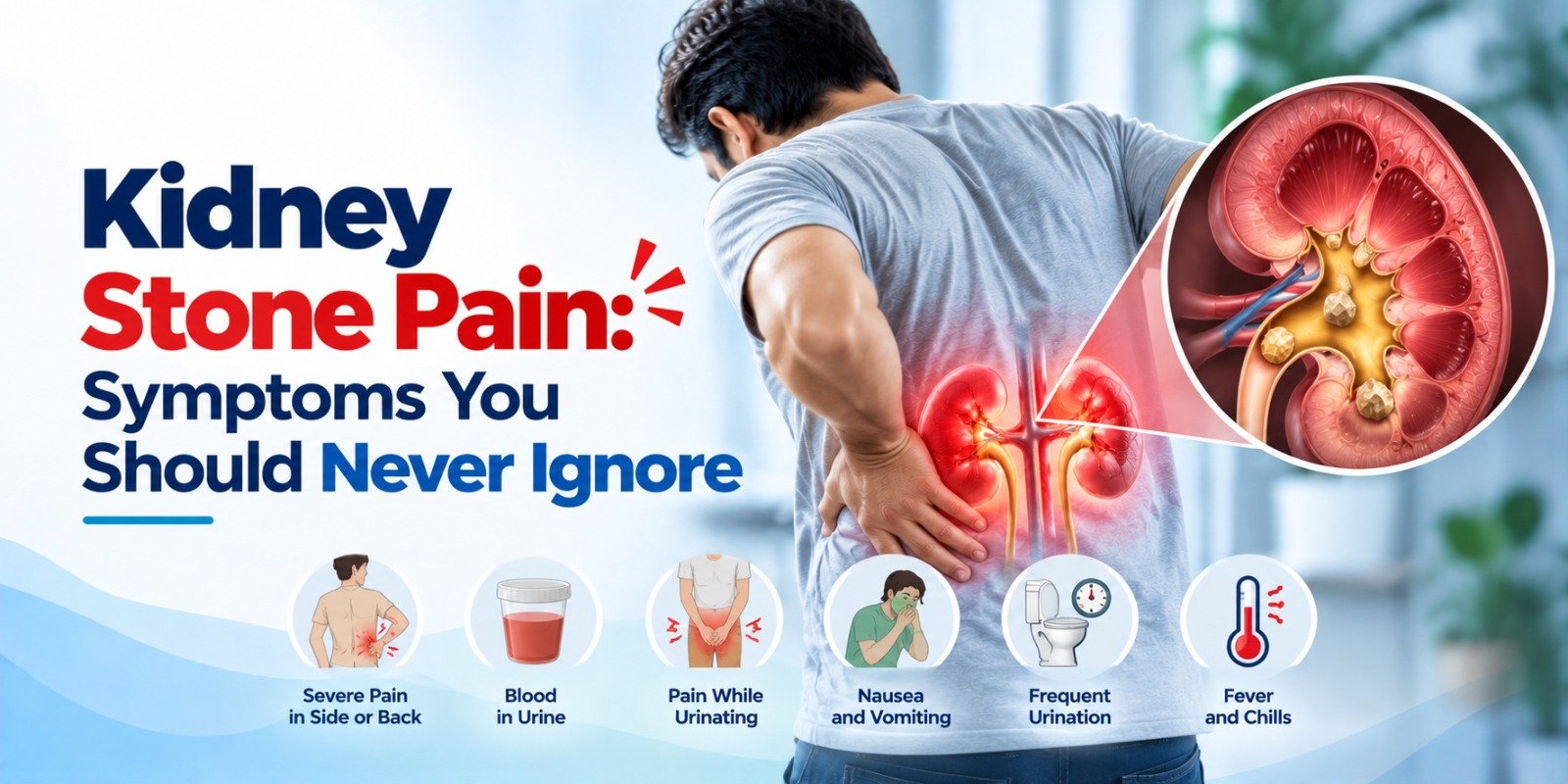
Kidney stones are hard pieces of minerals that can form inside the kidneys. Some kidney stones are very small and may leave the body without causing much trouble. Larger stones, however, can block the flow of urine and cause severe pain.
Knowing the symptoms of kidney stones can help you understand when you need medical attention.
What Is a Kidney Stone?
A kidney stone forms when certain minerals and salts in the urine become concentrated and stick together. Over time, they can form a hard stone inside the kidney.
Kidney stones can be very small, like grains of sand, or much larger.
When a stone moves from the kidney into the ureter, the tube that carries urine to the bladder, it can cause severe pain.
What Does Kidney Stone Pain Feel Like?
Kidney stone pain can be sudden and intense. It may come and go in waves as the stone moves through the urinary tract.
The pain may be felt in:
- The side or lower back
- The lower abdomen
- The groin
- Around the waist
The location of the pain may change as the stone moves.
Some people describe kidney stone pain as one of the strongest types of pain they have experienced.
Symptoms of Kidney Stones You Should Not Ignore
1. Severe Pain in the Side or Back
Sudden, severe pain in the side or back is a common symptom of a kidney stone.
The pain may come in waves and may become stronger or weaker over time.
2. Pain Moving Toward the Groin
As a kidney stone moves down the ureter, the pain may move from the back or side toward the lower abdomen or groin.
This change in pain location can happen as the stone moves through the urinary tract.
3. Blood in the Urine
A kidney stone can irritate the urinary tract and cause blood to appear in the urine.
The urine may look pink, red, or brown. Sometimes blood can only be found through a urine test.
Blood in the urine should always be checked by a healthcare professional.
4. Pain or Burning While Urinating
A kidney stone can cause pain or burning when you urinate, especially when the stone is close to the bladder.
You may also feel an increased need to urinate.
5. Frequent Urination
You may feel that you need to urinate more often than usual. You may also feel an urgent need to use the bathroom.
6. Nausea and Vomiting
Severe pain from a kidney stone can cause nausea and vomiting.
If vomiting continues, dehydration can become a concern and medical treatment may be needed.
7. Cloudy or Bad-Smelling Urine
Cloudy or unusually strong-smelling urine may occur with a urinary infection, which can sometimes occur along with a kidney stone.
This should be checked by a doctor.
8. Fever and Chills
Fever and chills should not be ignored, especially if you also have kidney stone symptoms.
A blocked urinary tract combined with an infection can become serious and requires urgent medical attention.
When Is Kidney Stone Pain an Emergency?
Seek urgent medical care if you have kidney stone symptoms along with:
- Fever or chills
- Severe or worsening pain
- Repeated vomiting
- Difficulty passing urine
- Very little urine
- Blood in the urine
- Feeling extremely weak or unwell
A kidney stone can sometimes block urine flow. If an infection is also present, it can become a serious medical problem.
What Causes Kidney Stones?
Kidney stones can form for several reasons.
Common risk factors include:
- Not drinking enough fluids
- High salt intake
- Certain eating habits
- Family history of kidney stones
- Previous kidney stones
- Obesity
- Some medical conditions
- Certain medicines
- Some digestive conditions
Drinking enough fluids can help reduce the risk of many types of kidney stones.
How Are Kidney Stones Diagnosed?
A doctor may use several tests to find a kidney stone and understand its size and location.
These may include:
Urine Test
A urine test can look for blood, infection, and substances that may contribute to stone formation.
Blood Test
Blood tests can check kidney function and levels of certain minerals.
Imaging Tests
An ultrasound or CT scan may be used to locate a stone and check whether it is blocking the urinary tract.
How Are Kidney Stones Treated?
Treatment depends on the size and location of the stone and whether it is causing a blockage or infection.
Small stones may pass naturally with time and appropriate medical care.
For larger stones or stones that do not pass, doctors may recommend treatments such as:
- Medicines to help manage pain
- Medicines that may help some stones pass
- Shock wave treatment to break the stone into smaller pieces
- A procedure to remove or break the stone
- Other treatment if the stone is causing a blockage or infection
Your doctor will choose the treatment based on your individual condition.
How Can You Reduce the Risk of Kidney Stones?
You can take some simple steps to reduce your risk.
Drink Enough Fluids
Staying well hydrated helps keep urine diluted. Your doctor may recommend a specific fluid intake depending on your health and kidney condition.
Reduce Excess Salt
A high-salt diet can increase the risk of some kidney stones. Limiting excess salt can also support overall health.
Follow a Balanced Diet
Your diet may need to be adjusted depending on the type of kidney stone you have. A doctor or dietitian can provide personalized advice.
Maintain a Healthy Weight
Maintaining a healthy weight may help reduce the risk of kidney stones and other health problems.
Final Thoughts
Kidney stones can cause sudden and severe pain, especially when a stone moves through the urinary tract. Pain in the side or back, blood in the urine, painful urination, nausea, and frequent urination are some possible symptoms.
Do not ignore severe pain, fever, chills, difficulty passing urine, or repeated vomiting. These symptoms may indicate a blockage or infection that needs urgent medical attention.