
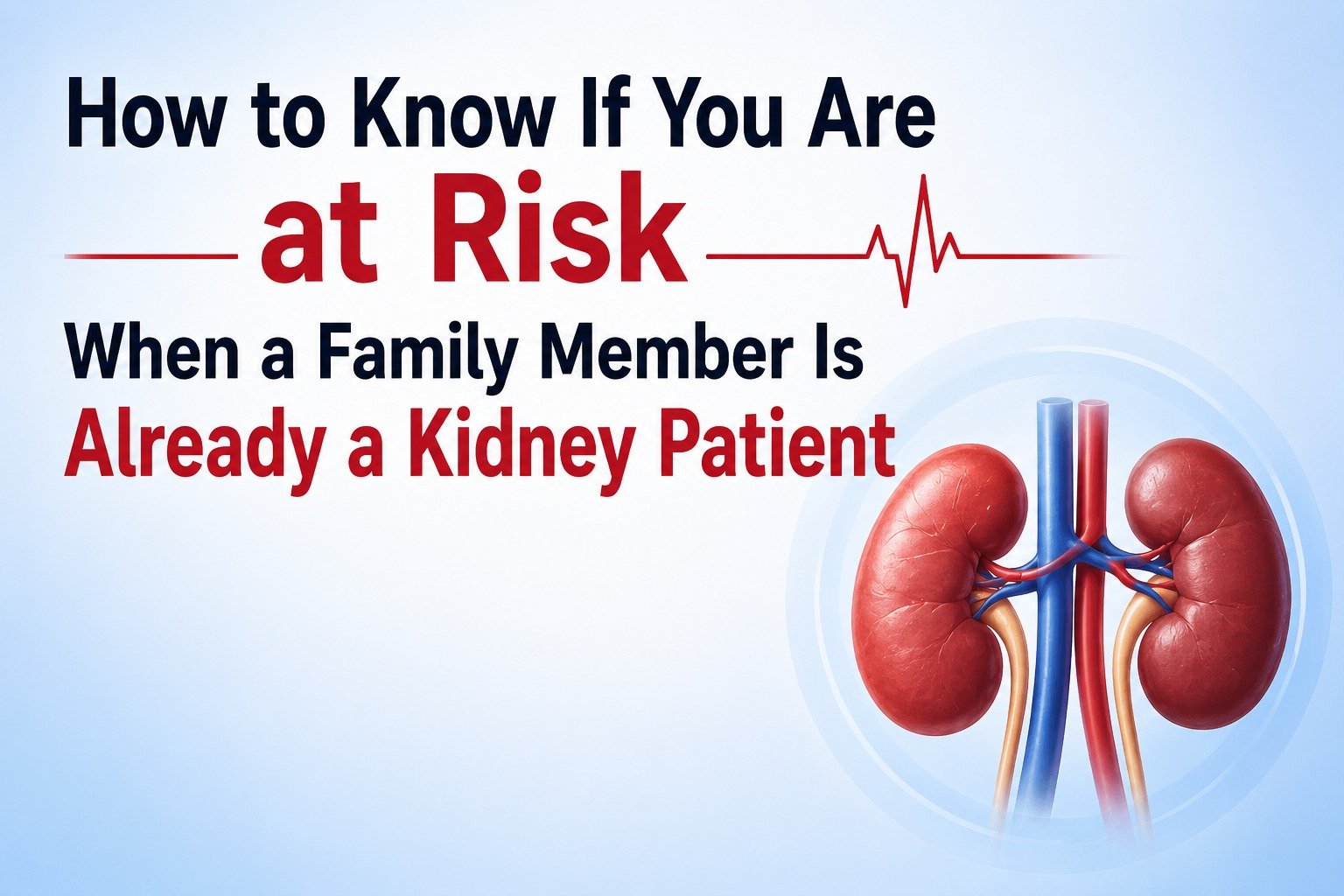
If someone in your family has kidney disease, you may wonder if you are also at risk. This is a common question. The good news is that having a family member with kidney disease does not mean you will definitely get it. However, it is important to understand your risk and take steps to keep your kidneys healthy.
Can Kidney Disease Run in Families?
Yes, some kidney diseases can run in families. If your parents, brothers, sisters, or other close relatives have kidney disease, your chances of developing kidney problems may be higher. Family members may also share similar eating habits and lifestyles, which can affect kidney health.
What Increases Your Risk?
Your risk of kidney disease may be higher if you:
– Have a family history of kidney disease
– Have diabetes
– Have high blood pressure
– Are overweight
– Smoke or use tobacco
– Have heart disease
– Often take painkillers without medical advice
If you have one or more of these risk factors, regular health checkups are important.
Signs You Should Not Ignore
Kidney disease often does not show symptoms in the early stages. As the condition develops, you may notice:
– Swelling in your feet, ankles, or face
– Feeling tired all the time
– Changes in urination
– Blood in the urine
– Foamy urine
– Loss of appetite
– Muscle cramps
If you experience any of these symptoms, talk to a doctor.
How Can You Check Your Kidney Health?
The best way to know if you are at risk is through regular medical tests. A doctor may recommend blood tests, urine tests, blood pressure checks, and blood sugar tests. These tests can help find kidney problems early, even before symptoms appear.
Simple Ways to Protect Your Kidneys
There are many things you can do to keep your kidneys healthy:
– Drink enough water every day
– Eat healthy foods such as fruits and vegetables
– Reduce salt in your diet
– Exercise regularly
– Maintain a healthy weight
– Avoid smoking and tobacco products
– Keep your blood pressure and blood sugar under control
– Visit your doctor for regular checkups
These healthy habits can lower your risk of kidney disease.
When Should You See a Doctor?
If a close family member has kidney disease, it is a good idea to discuss your risk with a doctor. You should also seek medical advice if you notice symptoms such as swelling, blood in your urine, or unusual tiredness. Early detection can help prevent serious kidney problems in the future.
Conclusion
Having a family member with kidney disease can increase your risk, but it does not mean you will get the disease. By staying aware of the warning signs, getting regular health checkups, and following a healthy lifestyle, you can protect your kidneys and reduce your chances of developing kidney disease. Taking care of your kidney health today can help you stay healthier in the future.