

Blogs
UTI and Kidney Infection: What Is the Difference?

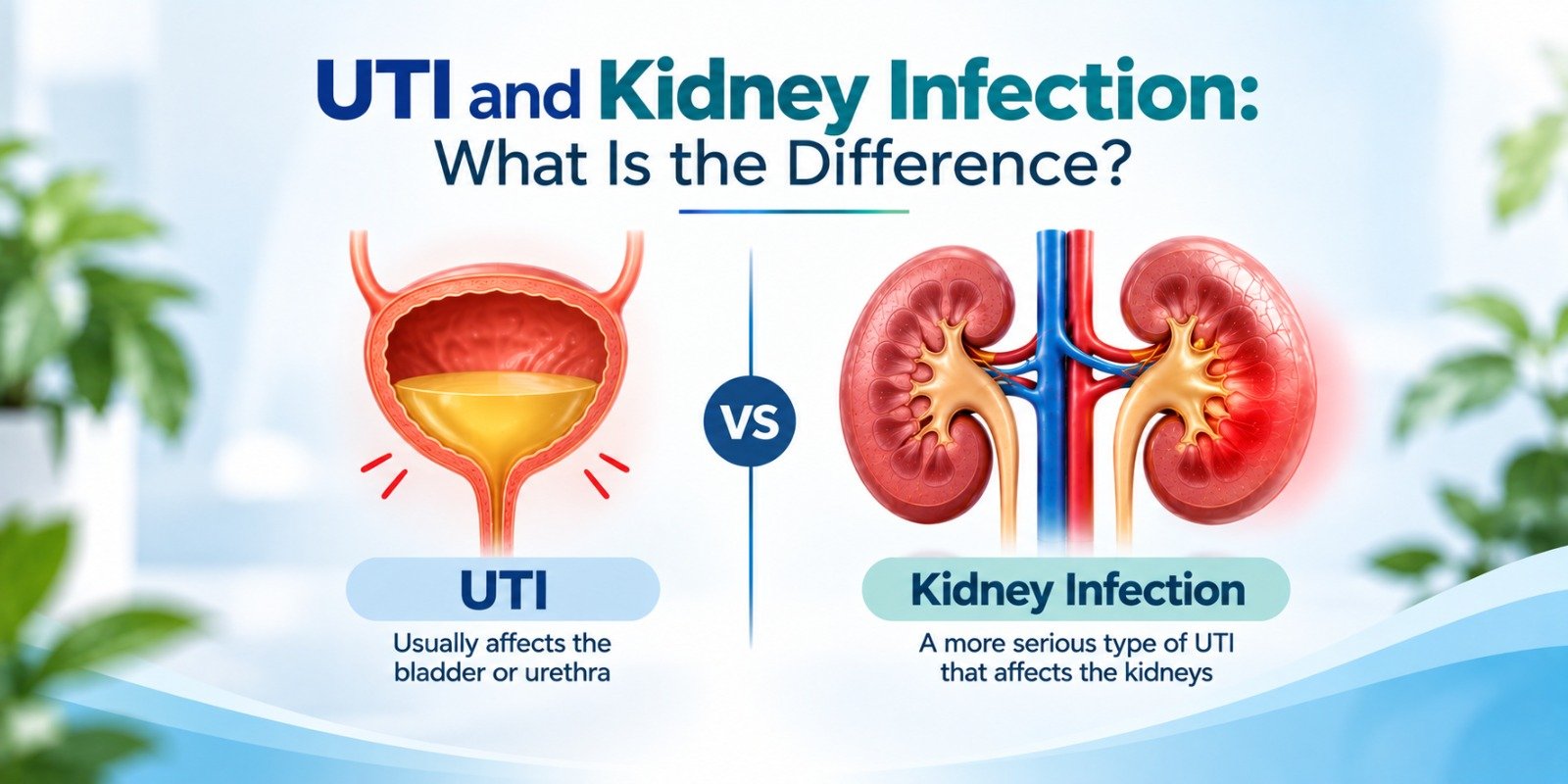
A urinary tract infection (UTI) is an infection that can affect the bladder, urethra, or other parts of the urinary system. A kidney infection is a more serious type of UTI that affects one or both kidneys.
A UTI can sometimes spread from the bladder to the kidneys if it is not treated properly. Knowing the symptoms can help you get medical care at the right time.
Symptoms of UTI
Common symptoms of a UTI include:
- Burning or pain while urinating
- Frequent need to urinate
- Passing only a small amount of urine
- Cloudy or strong-smelling urine
- Pain or pressure in the lower abdomen
- Blood in the urine in some cases
Symptoms of Kidney Infection
A kidney infection may cause UTI symptoms along with more noticeable signs such as:
- Fever and chills
- Pain in the back or side
- Nausea or vomiting
- Feeling very tired or weak
- Burning while urinating
- Frequent urination
- Cloudy or bloody urine
Effects of UTI
If treated properly, most UTIs can be managed without long-term problems. However, leaving a UTI untreated can allow the infection to spread upward toward the kidneys.
Possible effects include:
- Increased pain and discomfort
- Infection spreading to the kidneys
- Repeated urinary infections
- More serious illness if the infection becomes severe
Effects of Kidney Infection
A kidney infection needs proper medical treatment because it can affect kidney health if it becomes severe or is left untreated.
Possible effects include:
- Kidney inflammation
- Reduced kidney function in severe cases
- Repeated kidney infections
- Infection spreading into the bloodstream
UTI vs. Kidney Infection
UTI: Usually causes burning during urination, frequent urination, and lower abdominal discomfort.
Kidney infection: Can cause these urinary symptoms along with fever, chills, nausea, and pain in the back or side.
When to See a Doctor
Do not ignore urinary symptoms, especially if they are getting worse. Seek medical care if you develop fever, chills, severe back or side pain, vomiting, or blood in the urine.
Pregnant people, children, older adults, and people with certain medical conditions may need medical attention sooner.
Conclusion
UTIs and kidney infections are related, but they are not the same. A UTI commonly affects the lower urinary tract, while a kidney infection affects the kidneys and can cause stronger symptoms.
Early treatment can help prevent a UTI from spreading to the kidneys. If you notice urinary symptoms along with fever or back pain, speak with a healthcare professional promptly.