

Blogs
How to Get Rid of Kidney Stones

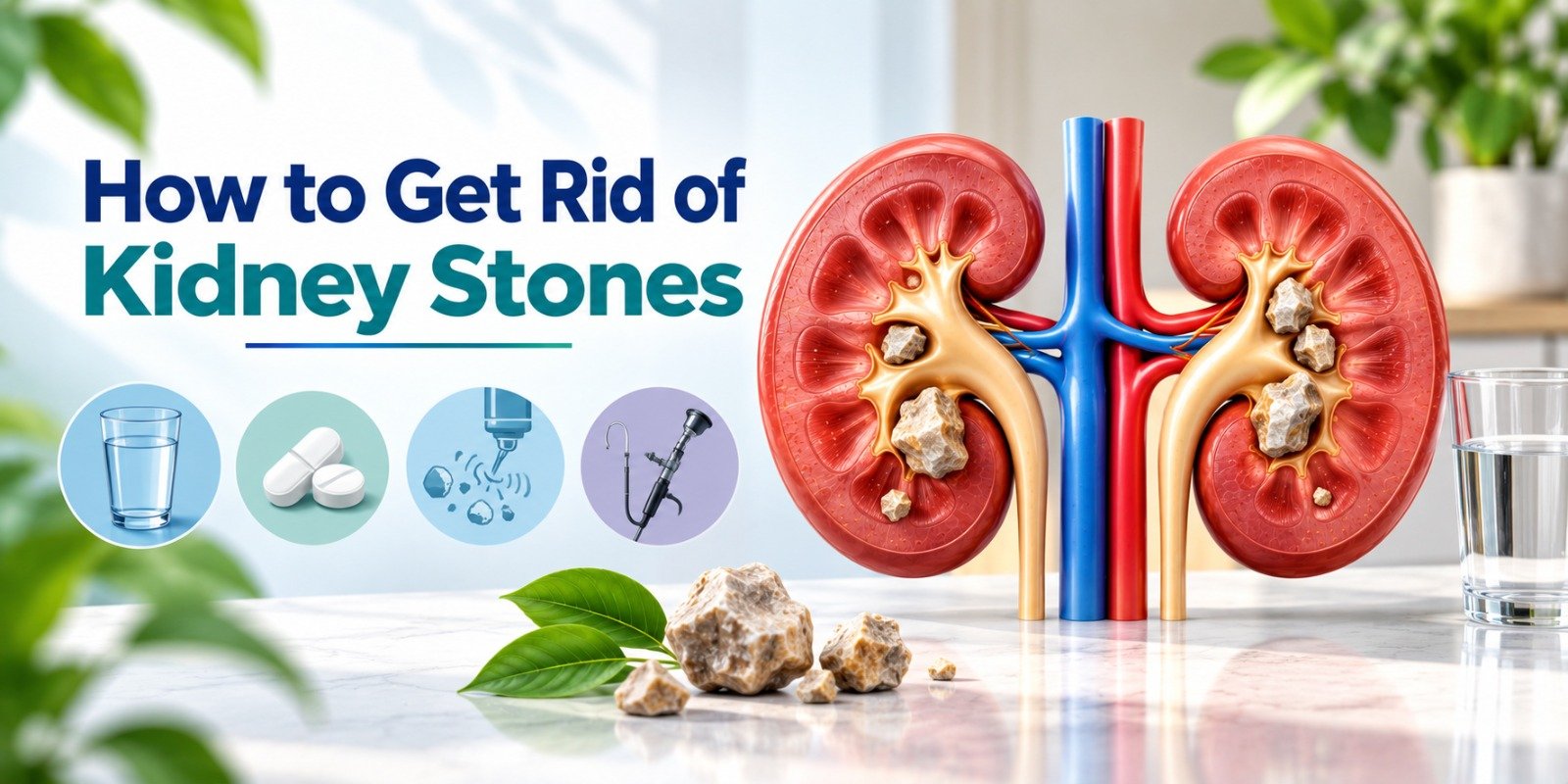
Kidney stones are hard pieces of minerals that can form inside the kidneys. They can be very small or large enough to cause pain and block the flow of urine. The treatment depends on the size, location, and type of the stone, as well as your symptoms.
Some small kidney stones may pass naturally, while larger stones may need medical treatment.
1. Drink Enough Water
For small stones, drinking enough water can help your body pass the stone through the urine. Your doctor may recommend increasing your fluid intake depending on your health.
Try to drink water regularly throughout the day. If you have been told to limit fluids because of another medical condition, follow your doctor’s advice.
2. Medicines for Pain
Kidney stones can cause strong pain, especially when the stone moves through the urinary tract. A healthcare professional may recommend pain medicine to help manage the discomfort.
Do not take pain medicines in large amounts or for a long time without medical advice.
3. Medicines to Help Pass the Stone
In some cases, doctors may prescribe medicines that relax the muscles of the urinary tract. This can make it easier for certain stones to pass.
These medicines are not suitable for everyone, so they should only be taken when prescribed by a healthcare professional.
4. Shock Wave Lithotripsy (SWL)
If a stone is too large to pass naturally, shock wave lithotripsy may be an option.
This treatment uses focused shock waves to break the kidney stone into smaller pieces. The smaller pieces can then pass through the urine.
5. Ureteroscopy
During ureteroscopy, a doctor uses a thin instrument to enter the urinary tract and locate the stone. The stone may be removed or broken into smaller pieces using a laser.
This treatment is commonly used when a stone is stuck in the urinary tract or needs to be removed.
6. Surgery for Large or Difficult Stones
Very large stones or stones that are causing serious blockage may require a procedure called percutaneous nephrolithotomy (PCNL).
A small opening is made in the back so the doctor can reach and remove the stone from the kidney. The procedure is usually considered for larger or more complex stones.
Can Kidney Stones Be Prevented?
After treatment, your doctor may recommend tests to find out what type of stone you had. Depending on the cause, prevention may include:
- Drinking enough water
- Reducing excess salt
- Following a balanced diet
- Maintaining a healthy weight
- Limiting certain foods if recommended by your doctor
- Taking prescribed medicines when needed
Conclusion
Kidney stones can sometimes pass naturally, especially when they are small. Larger stones or stones causing blockage may need treatments such as shock wave lithotripsy, ureteroscopy, or surgery.
The right treatment depends on your individual condition. If you think you have a kidney stone, speak with a healthcare professional for proper diagnosis and treatment.