
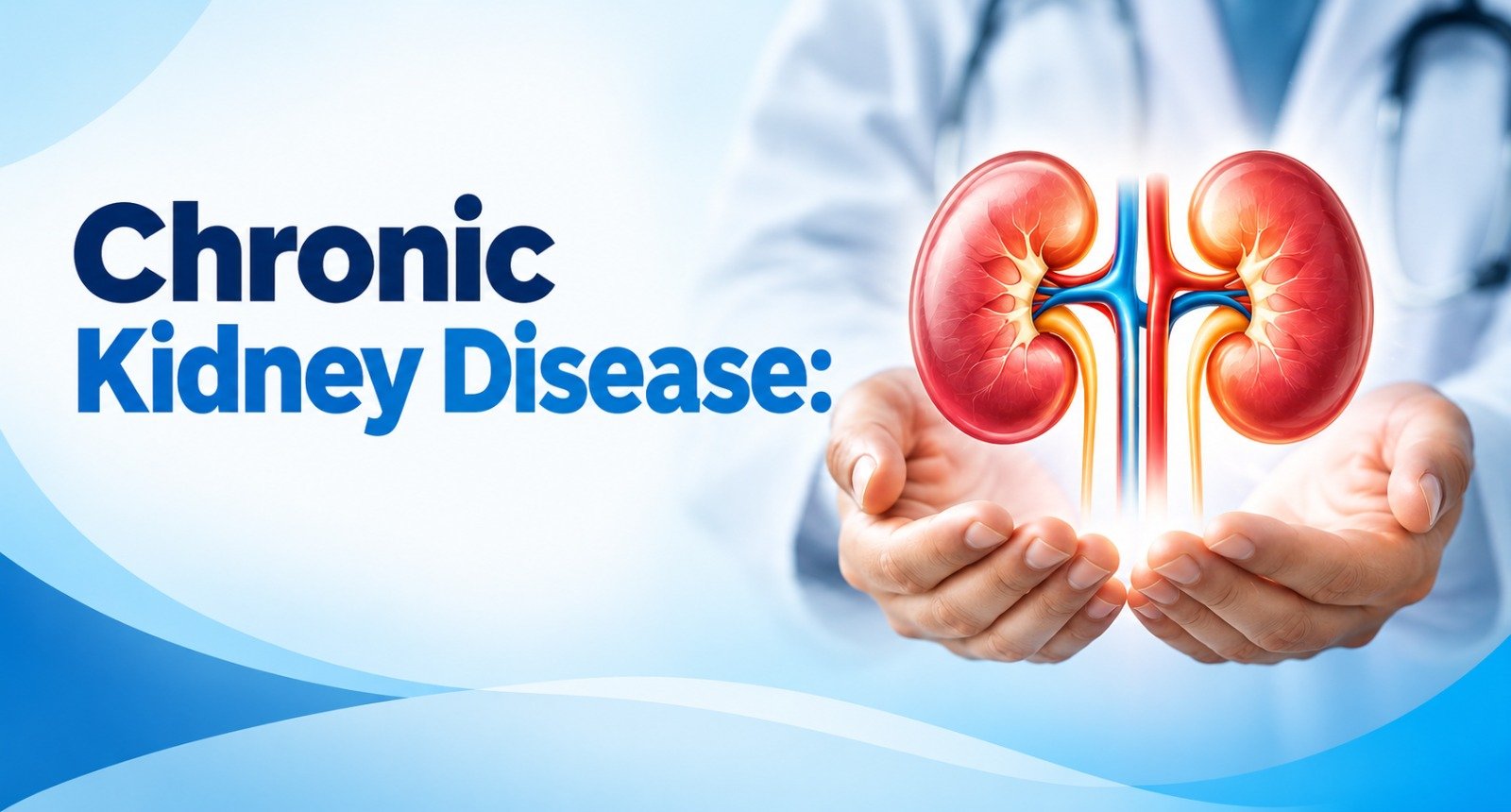
Chronic Kidney Disease (CKD) is a condition where the kidneys slowly lose their ability to work properly. Healthy kidneys remove waste and extra fluid from the blood. When kidney function decreases, waste can build up in the body and cause health problems.
CKD often develops slowly, and many people may not notice symptoms in the early stages. Regular kidney check-ups are especially important for people with *diabetes, high blood pressure, heart disease, or a family history of kidney problems.*
What Causes Chronic Kidney Disease?
Some of the most common causes of CKD include:
1. Diabetes
High blood sugar for a long time can damage the small blood vessels in the kidneys and affect their ability to filter blood.
2. High Blood Pressure
Uncontrolled high blood pressure can damage the blood vessels in the kidneys. Kidney disease can also make blood pressure more difficult to control.
Other causes may include kidney infections, kidney stones, autoimmune diseases, inherited kidney conditions, and some medicines.
Symptoms of Chronic Kidney Disease
Early CKD may not cause any clear symptoms. As kidney function becomes lower, a person may experience:
* Swelling in the feet, ankles, or face
* Changes in urination
* Foamy urine
* Tiredness or weakness
* Loss of appetite
* Nausea or vomiting
* Itchy or dry skin
* Muscle cramps
* Trouble sleeping
* Difficulty concentrating
* Shortness of breath
These symptoms can also occur with other health conditions, so proper medical evaluation is important.
Treatment for Chronic Kidney Disease
Treatment depends on the cause and stage of CKD. The main goal is to protect kidney function and slow further damage.
1. Control Blood Pressure
Keeping blood pressure under control can help protect the kidneys.
2. Manage Diabetes
If you have diabetes, keeping blood sugar within the recommended range can help reduce kidney damage.
3. Follow a Healthy Diet
A kidney-friendly diet may include changes to salt, protein, potassium, phosphorus, or fluid intake depending on your kidney function. A doctor or dietitian can guide you.
4. Take Medicines as Prescribed
Medicines may be used to control blood pressure, diabetes, cholesterol, swelling, and other CKD-related problems.
5. Stay Active
Regular physical activity, maintaining a healthy weight, avoiding smoking, and getting enough sleep can support overall health.
Can CKD Be Prevented?
Not all cases of CKD can be prevented, but you can reduce your risk by:
- Controlling blood pressure
- Managing diabetes
- Maintaining a healthy weight
- Eating a balanced diet
- Staying physically active
- Avoiding smoking
- Taking medicines only as advised
- Getting regular kidney tests when you are at risk
What Happens in Advanced CKD?
In advanced kidney disease, kidney function may become very low. When the kidneys can no longer perform their essential functions, *dialysis or kidney transplantation* may be considered depending on the person’s condition.
Early diagnosis and proper treatment can help slow the progression of CKD in many people.
When Should You See a Doctor?
You should consider a kidney health check if you have *diabetes, high blood pressure, heart disease, or a family history of kidney disease*.
Do not ignore symptoms such as persistent swelling, changes in urination, foamy or bloody urine, unusual tiredness, or shortness of breath.
Conclusion
Chronic Kidney Disease can develop without obvious symptoms, especially in the early stages. Regular testing, a healthy lifestyle, and proper treatment can help protect kidney function.
If you are concerned about your kidney health, speak with a qualified healthcare professional for the right tests and treatment plan.